Chapter 1 of 1
Wealth Is What You Don't See
"Wait," my friend Dana said, halfway through her coffee. "A janitor died with how much?"
"Eight million dollars," I said. "Ronald Read. He pumped gas, then swept floors at JCPenney. When he died in 2014, his town found out he was rich."
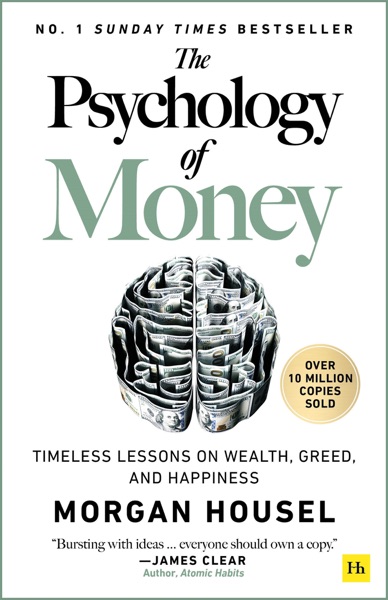
That story opens The Psychology of Money by Morgan Housel, and it carries the whole book.
The big idea is simple. Doing well with money has little to do with how smart you are. It has almost everything to do with how you behave.
"So how did he do it?" Dana asked.
"No lottery. No hot stock. He bought shares in solid companies and held them for decades. Drove used cars. Chopped his own firewood."
"That's it?"
"That's it. Then Housel gives you the other man. Richard Fuscone. Harvard degree, MBA, a star executive at Merrill Lynch."
"Let me guess. Rich forever."
"He retired early to invest his own fortune. He borrowed heavily, spent hard, and went bankrupt in the 2008 crisis."
Ronald Read
- no fancy education
- saved for decades
- never touched what he built
Richard Fuscone
- Harvard and an MBA
- borrowed and spent big
- lost nearly everything
Dana put her cup down.
"So the secret is just... behaving?"
"Yes," I said. "That's the book."
Housel says money success is a soft skill, not a hard one. In what other field could a janitor with no training beat a Harvard executive? Not surgery. Not engineering.
Only money works this way. It rewards patience, humility, and staying calm when others panic.
"Okay," Dana said. "Which behaviors?"
"Three. First, wealth is what you don't see. The nice car is money that got spent. Real wealth is the money that never became a car."
"So nobody can copy it."
"Exactly. It's invisible. Second, leave room for error. Read could hold through every crash because he never needed to sell. Fuscone borrowed, so one bad year wiped him out."
"And third?"
"Never interrupt compounding. Housel points out that most of Warren Buffett's fortune came after his mid sixties. His real edge was starting young and never stopping."
Time is the most powerful force in money. Quitting early kills it.
- Save
- Invest
- Hold through the panic
- Let time compound
- Save more
"But what am I saving for?" Dana asked. "I don't have a goal."
"That's the best part. Housel says save without a reason. The money you save with no goal buys you the one thing everyone wants."
"Which is?"
"Freedom. Control over your own time. Waking up and saying, I can do whatever I want today. That's the highest dividend money pays."
She was quiet for a second. Then she opened her banking app right there at the table.

Here is the whole book in three moves.
Remember this
- Wealth is the money you don't spend, so stop performing rich
- Build room for error, because surviving beats optimizing
- Start early, hold long, and never interrupt compounding
According to Housel, why did the janitor beat the Harvard executive?
The move, today: set up one automatic transfer to savings. It does not need a goal. It does not need to be big.
Dana moved twenty dollars before she finished her coffee. The amount is not the point. The behavior is.
Because that is what Housel proved with a janitor and an executive. The person who behaves well beats the person who knows more, almost every time.
Which left me with a question I could not shake on the walk home.
If behavior beats brains with money, what else in your life are you overthinking? Book 2 finds out.
End of Book 1.
Book 2 is coming