Chapter 1 of 2
The Story Ape
"Okay, settle this," my friend Dana said, waving her coffee at me. "Why us? Lions are stronger. Ants are more organised. Why do humans run the whole planet?"
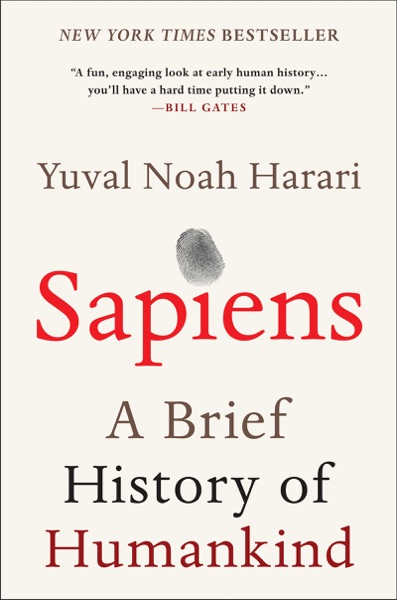
I had just finished Sapiens by Yuval Noah Harari. I had an answer ready.
"Fiction," I said. "We tell stories that aren't true, and we believe them together. That's our superpower."
She laughed. "Stories? That's it?"
"Think about it. A chimp can trust maybe fifty other chimps it knows. Harari says humans hit a wall too, at around 150 people."
"And past that?"
"Gossip breaks down. You can't personally know everyone."
"So how do a million strangers cooperate?" I asked her.
She shrugged.
"They believe the same myth. A nation. A god. A company. Money. None of these exist in nature. You can't point at a country. But if we all believe in it, we can build armies, courts and highways together."
"Money isn't a myth," Dana said. "Money is real."
"Is it? A dollar bill is paper. It works only because you trust a stranger will accept it tomorrow."
"Huh."
"Harari calls money the most universal system of mutual trust ever created. It's a story everyone believes, even people who agree on nothing else."
Then I walked her through the three big turns in the book. Harari says our whole history hangs on three revolutions.
- 1Cognitive Revolution, about 70,000 years ago, we start telling shared stories
- 2Agricultural Revolution, about 12,000 years ago, we settle down and farm
- 3Scientific Revolution, about 500 years ago, we admit ignorance and start measuring
"Wait," Dana said. "Farming was a revolution? Farming sounds like an upgrade."
"Harari calls it history's biggest fraud," I said. "Foragers ate varied food and worked fewer hours. Farmers got worse diets, aching backs, and crowded villages full of disease."
"Then why do it?"
"Farming fed more babies. So there was no going back. And here's his twist. Maybe we didn't domesticate wheat. Maybe wheat domesticated us."
"Excuse me?"

"Wheat went from a wild grass to covering huge stretches of the planet. We cleared land for it, watered it, guarded it. Who was working for whom?"
Forager life
- varied diet
- fewer work hours
- moved with the food
Farmer life
- one fragile crop
- longer work days
- stuck in place, but more people fed
Dana was quiet for a second. "Okay. And the science one?"
"The Scientific Revolution started with three words. We don't know."
"That's it?"
"For most of history, people assumed the answers were already written down, in scripture or in the ancients. Around 500 years ago, Europeans started admitting ignorance. Maps got drawn with blank spaces on them."
"Blank spaces are an invitation," she said.
"Exactly. Admitting you don't know is what sends you looking."
"So the whole book is: stories got us cooperating, wheat trapped us, and doubt made us powerful."
"That's the spine of it," I said.
According to Harari, why can humans cooperate in groups of millions?
She tapped the table. "Fine. What am I supposed to do with this on a Tuesday?"
I gave her the three moves I took from the book.
Remember this
- Question one inherited story this week, ask who benefits if you keep believing it
- Treat money as trust, protect your trustworthiness like the asset it is
- Practice saying "I don't know", it is the starting gun for actually learning
"Question your stories doesn't mean burn everything down," I said. "It means notice that careers, borders and brands are agreements, not laws of physics. Agreements can be renegotiated."
Try this: today, pick one belief you never chose, something from family, school or your feed. Write one sentence of evidence for it and one against. That small act of doubt is the Scientific Revolution, running on your phone.
Dana finished her coffee. "So the story ape won. We rule the planet. Happy ending?"
"That's the thing," I said. "Harari doesn't end there."
His next question waits in Homo Deus, and it kept me up that night: now that Sapiens run the world, what will we choose to become?