Chapter 1 of 1

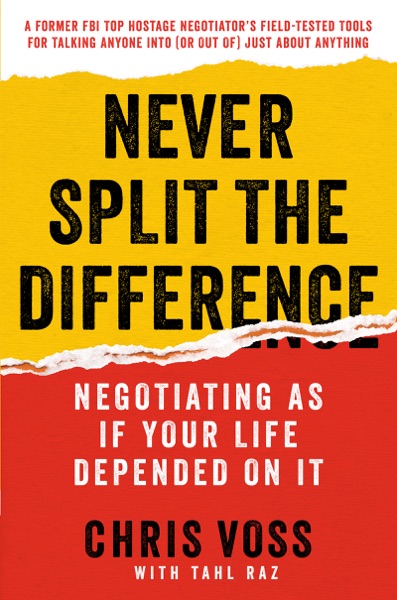
Never Split the Difference in Ten Minutes

"It sounds like you think we're going to hurt him," Chris Voss said into the phone. The bank robber on the other end went quiet. Then his voice cracked.

That was the moment I stopped reading and sat up. Voss ran hostage negotiation for the FBI. His whole book comes down to one claim, and I could name it in a breath.

Negotiation is emotional, not logical. People do not decide with reason and then feel. They feel first, then find reasons. So the winning move is not a better argument. It is making the other person feel heard.

Voss called this tactical empathy. You do not have to agree with someone. You have to show them you understand how the world looks from their side. Once they feel understood, they soften. I watched him prove it with killers, so I believed it would work on my landlord.

The simplest tool was the mirror. You repeat the last one to three words the other person said, as a gentle question, then shut up. In that bank standoff, Voss mirrored the robber's own words back to him. The man kept talking, kept revealing, and the standoff ended with no one hurt. Silence after a mirror is not awkward. It is bait.

The mirror works because of a loop I sketched in my notes.

  • They speak
  • You mirror their last words
  • They feel heard
  • They reveal more

The second tool was the label. You name the other person's fear out loud. "It seems like you're worried this will fall apart." Naming a negative feeling drains its power. Denying it, saying "don't worry," makes it worse. Voss opened one talk with a fugitive by labeling every fear the man had. The man surrendered without a word being fired.

Then Voss flipped everything I thought I knew about "yes."

Chasing yes

  • people feel trapped
  • they say yes to escape you
  • agreement is fake
vs

Inviting no

  • people feel safe
  • saying no gives them control
  • the real talk starts

"No" is not failure. It is protection. When someone says no, they relax, because they know you cannot steamroll them. Voss even suggested emails like "Have you given up on this project?" A no to that question is a door opening.

And the word to listen for is not "you're right." It is "that's right." When someone says "that's right," they have heard their own view in your mouth. Voss got a militia leader to fold after summarizing the man's worldview so well that he said those two words.

The heaviest tool was the calibrated question. It starts with "how" or "what" and hands the other side an illusion of control while they solve your problem. When kidnappers in Haiti demanded a huge ransom, an FBI negotiator asked, "How am I supposed to do that?" No refusal. No counteroffer. The kidnapper thought about it and dropped his price. The question made the kidnapper carry the negotiator's problem.

I stacked the whole book into three moves.

  1. 1Mirror their last three words and go silent
  2. 2Label the fear out loud, "It sounds like you're worried that..."
  3. 3Ask "How am I supposed to do that?" instead of saying no

Why does asking "How am I supposed to do that?" beat saying no outright?

The point Voss hammered home in his title: never split the difference. Meeting in the middle feels fair, but one brown shoe and one black shoe is not a compromise, it is a mess. A bad deal is worse than no deal.

Remember this

  • Feelings drive every deal, so aim at feelings
  • Get to "that's right," not "yes"
  • Never accept a lazy middle, ask "how" instead

Try this: the next time someone tells you something hard, at work or at home, repeat their last three words back as a question. Then count to four in your head and say nothing. I tried it on my sister the night I finished the book. She talked for ten straight minutes and thanked me for the best advice I never gave.

The FBI taught me to talk a gunman down, but the next book claims the real hostage in every negotiation is your own habits, and I had already caught myself taking my own bait.