Chapter 3 of 10
Our Superpower Is Shared Fiction
"Show me the corporation," the lawyer said. "Point at it."
We were standing in her firm's lobby. Marble floors, a logo on the wall, people with badges.
I pointed at the building.

She shook her head. "That's a building. The company could sell it tomorrow and still exist."
"The employees, then."
"Every one of them could quit. Replace them all. Same company."
"The CEO?"
"CEOs get fired every week. The company outlives them. So where is it?"
I gave up. She smiled like she had done this bit before.
"Nowhere. A corporation is a story lawyers tell. I file papers, a judge nods, and suddenly there is a legal person. It can own land, borrow money, and get sued."
"Because a judge nodded?"
"Because millions of people agree to act like it exists. That is all. And that is enough."
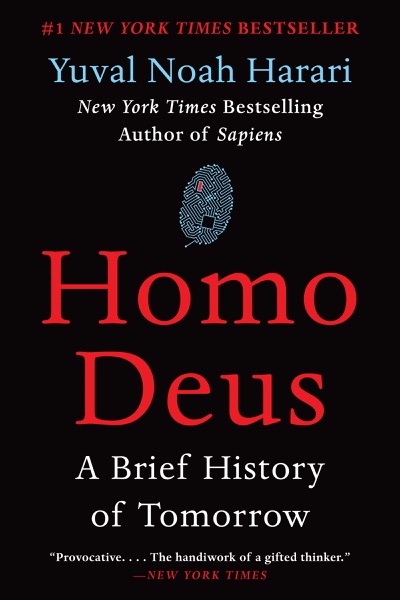
That is Harari's core claim, plain. Humans rule the planet not because each of us is so smart, but because we cooperate in huge numbers around shared fictions.
Money, gods, nations, human rights, companies. None of them exist in nature. All of them exist because we believe together.
Here is why that matters. One-on-one, we are not that special. A chimpanzee would beat you in a fight.
But ten thousand chimps cannot cooperate. Ten thousand humans can build a cathedral, an army, or a stock exchange.
Chimps cooperate only with individuals they know personally, maybe a few dozen. Humans cooperate with total strangers.
You hand your money to a bank teller you have never met. You obey laws written by people who died before you were born.
What makes that possible? Stories.
A chimp will never give you a banana because you promise unlimited bananas after death. Only humans trade real things for imagined ones. That gullibility, oddly, is our superpower.
Harari splits reality into three kinds. Objective things, like rivers and gravity, exist whether you believe or not. Subjective things, like your headache, exist only in one mind.
Intersubjective things exist in the shared imagination of many minds.
Money is the perfect example. A dollar bill is paper. It has almost no objective value. But because everyone believes it has value, it does.
Harari calls money the most successful story ever told. Even people who reject each other's gods accept each other's cash.
"Try this thought experiment," the lawyer said. "Tomorrow morning, every human wakes up and stops believing in money. What happens?"

"Everything stops."
"Everything stops. The paper is still there. The belief is gone, so the value is gone. Now do the same with nations. With borders. With my whole profession, honestly."
The key point is that these fictions are not lies. They are tools.
Peugeot the company is a fiction, but it builds real cars. A nation is a fiction, but it collects real taxes and fields real armies.
Stories organize millions of strangers into one team. No other animal has anything close.
This also explains history's biggest fights. Wars are rarely about rivers and food alone. They are about which story wins. Whose god, whose flag, whose currency.
According to Harari, why do humans dominate the planet?
Why does this matter for you? Because you live inside these stories every day, and most of them feel like facts.
Your job title. Your credit score. Your citizenship. All intersubjective. All real only because we keep agreeing.
Knowing that gives you a strange kind of freedom. Stories can be edited.
Slavery was once a story everyone accepted. Then enough people stopped believing, and it fell.

The move: this week, pick one "fact" that runs your life. A rule at work, a status marker, a debt of honor.
Ask on paper, would this exist if people stopped believing in it? If the answer is no, it is a story. And stories can be renegotiated.
But here is the turn Harari makes next. Stories do not just organize us. They compete, and they get replaced.
If stories run the world, then the biggest story of our age, religion, was quietly replaced by something new. And the strange part is that most believers never noticed the swap.
Chapter 3 of 3 free.
Unlock the rest (7 chapters)