Chapter 3 of 10
Bad and Better
My sister called at ten at night. She skipped hello.

"Have you seen the news? The world is ending, Marion. Wars, floods, everything."
"Nadia, breathe. Can I tell you one sentence from a book I just finished?"
"If it's short."
"Things can be bad and better at the same time."
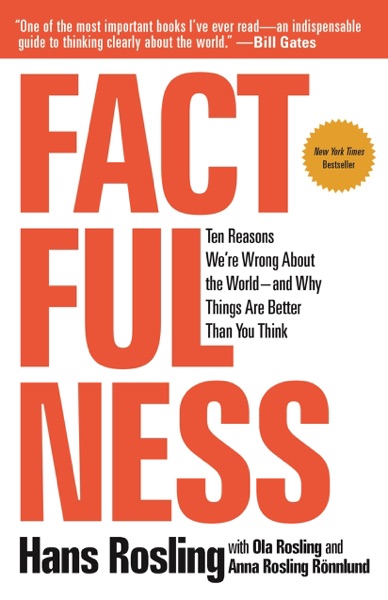
Here is the idea, plain and up front. Rosling calls our doom habit the negativity instinct. We notice the bad and miss the improving, because news shows drama, not trends.
"That sentence makes no sense," Nadia said.
"Think of a premature baby in an incubator. Her condition is bad. But yesterday she was worse, and today she's improving. Both things are true at once."
"Okay. The baby, fine. The world, no."
"Then let me read you the world's chart. Twenty years ago, twenty-nine percent of humanity lived in extreme poverty. Today it's nine percent."
She went quiet for a second. "Nine?"
"Nine. Extreme poverty almost halved in twenty years. Rosling calls it the most important change of our lifetime. Did you see a single headline about it?"

"No."
"Neither did I. Nobody did. Here's another. In 1800, roughly half of all children died before their fifth birthday. Half, Nadia. Today it's about four percent."
"Four percent is still a lot of children."
"It is. That's the point. Bad and better. Four percent is a tragedy worth fighting. It is also the lowest number in human history, and it keeps falling."
"So why does everything feel worse?"
"Three reasons, according to Rosling. First, we remember the past wrong. We forget how brutal it was. Second, journalists report events, not trends. A famine is news. A million kids getting vaccinated on a normal Tuesday is not."
"And third?"
"Third, it feels heartless to say things are improving while people still suffer. So even people who know the numbers stay quiet."
"That last one is me," she admitted. "Saying good news feels like saying stop caring."
"Rosling's answer is that it's the opposite. If you don't know poverty was cut in half, you don't know that fighting it works. Doom makes people give up. Progress makes people keep going."
I gave her more of his list. Legal slavery, gone almost everywhere. Smallpox, gone completely. Literacy, life expectancy, girls in school, access to clean water, all climbing for decades.
"He tracked thirty-two of these improving trends," I said. "The bad things falling, the good things rising. Almost none of them ever make the news."
"Because a graph slowly going the right way is boring."
"Exactly. A plane that lands is not a story. Multiply that by fifty years and you get a news feed full of crashes and a world full of safe landings you never heard about."
"But the wars are real, Marion. The floods are real."
"Completely real. Rosling never says don't worry, everything is fine. He says the world is bad and better. Hold both. Worry about the right things with a clear head, not a panicked one."
What does Rosling mean by "bad and better"?
"So what do I do at ten at night when the feed says everything is collapsing?" Nadia asked.
"Expect bad news to be over-reported. Not fake, over-reported. Then ask one question. Is this an event or a trend? The event might be awful while the trend is still improving."
Try this: next time a headline spikes your dread, look up the twenty-year trend behind it. Child deaths, poverty, disasters, disease. Odds are the line has been falling for decades while the headlines got louder.
"Bad and better," Nadia said slowly. "I might write that on a sticky note."
"Put it on your phone. That's where the doom lives."
She laughed, finally. Then she stopped.

"One thing though. Even if poverty is falling, there are just so many of us now. Billions more people every few years. Doesn't the population explosion wipe out all your nice trends?"
I smiled, because Rosling saw that question coming from miles away.
The next trap is worse, because it makes us panic about the future itself. It starts with the fear of endless population growth, and Dev was about to draw the scariest line I'd ever seen on a napkin.
Chapter 3 of 3 free.
Unlock the rest (7 chapters)