Chapter 1 of 10

Worse Than Chimps

"Quiz me," Dev said, stirring his coffee. "I read the news every day. I'll ace it."

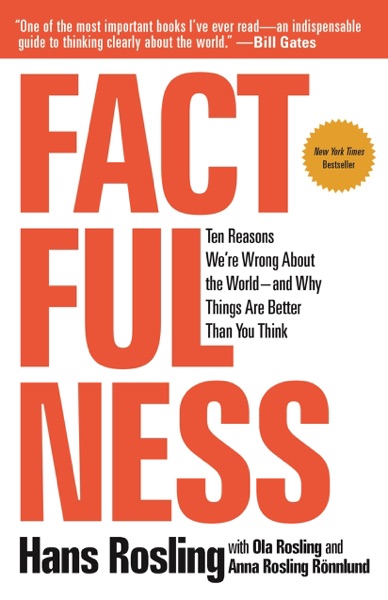
I had just finished Factfulness by Hans Rosling. Here is the big idea up front. Most people's picture of the world is decades out of date, and the real world is far better than we think.

"Question one," I said. "In the last twenty years, extreme poverty worldwide has done what? Almost doubled, stayed the same, or almost halved?"

"Doubled. Obviously."

"Wrong. It almost halved." I let that sit. "Question two. How many of the world's one-year-olds have been vaccinated against some disease? Twenty percent, fifty, or eighty?"

"Twenty," he said. "Maybe fifty, tops."

"Eighty percent, Dev. Eight out of ten kids on Earth."

He put his cup down. "You're making this up."

"Last one. Boys worldwide go to school for ten years on average. Girls go for three, six, or nine?"

"Three," he said. Then he saw my face. "Six?"

"Nine years. Almost the same as boys." I slid my phone across the table. "You scored zero out of three."

Here is the part that made me laugh out loud. Rosling asked these questions to thousands of people. Teachers, journalists, bankers, Nobel laureates. Almost everyone failed.

On his twelve-question version, most people got only two right.

Then came his famous comparison. Chimpanzees picking answers at random would score about a third correct. Random guessing beats educated humans.

"So I'm dumber than a chimp," Dev said.

"No. That's the whole point. Chimps guess randomly. We guess wrong on purpose. We don't lack knowledge. We have wrong knowledge, and we're confident about it."

Rosling's explanation is simple and a little scary. Our mental picture of the world came from old textbooks, old teachers, and dramatic news. Most of us carry a map from the 1960s in our heads.

Meanwhile the world quietly changed. Extreme poverty fell faster than ever. Child deaths dropped. Girls filled classrooms. Vaccines reached villages that had no roads when our textbooks were printed.

But nobody sent us the update. Good news is slow and boring. A plane that lands safely is not a story. So improvements pile up invisibly while disasters get all the airtime.

"Okay," Dev said, "but the world still feels like it's on fire."

"It can feel that way and still be improving. That's the whole book. Rosling isn't saying everything is fine. He's saying the facts are better than our feelings about them."

"And the experts?" Dev asked. "The people paid to know this stuff?"

"They failed too. Global health experts. Investment bankers deciding where money goes. And they failed the same way. Everyone guessed the world was worse than it is."

In Rosling's world quiz, why do chimps beat educated humans?

Dev finished his coffee and stared at the three questions on my phone.

"Every answer I gave was the gloomy one," he said. "Every single time."

"Exactly. That's the pattern. People don't miss randomly. They miss in one direction, toward doom."

Try this: give someone the three questions this week. Poverty, vaccines, girls in school. Watch them pick the gloomiest option every time, just like Dev did. Then notice that you probably would have too.

Because here is what Dev asked next, and it's the question the whole book answers.

"If everyone gets it wrong the same way," he said, "it's not ignorance. It's like something is pushing our guesses down. What's doing the pushing?"

If smart people get the facts this wrong, something in our heads must be broken, and Rosling names the first fault. He calls it the gap instinct, and Dev was about to walk straight into it.