Chapter 1 of 1
The Skill Your Phone Is Stealing
"When did you last think hard for one full hour?" my mentor asked me. "No phone, no email, no breaks. One hour."
I opened my mouth. Nothing came out. I could not remember a single time that month.

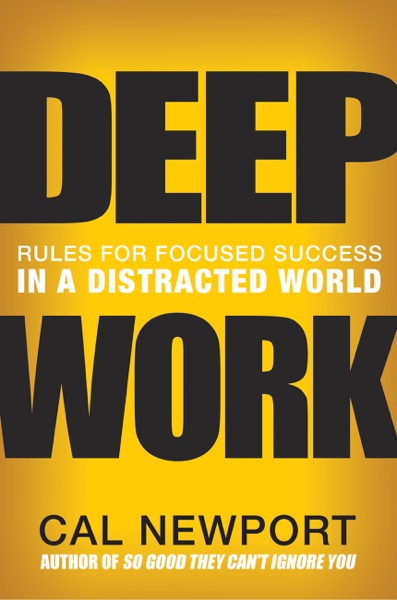
"That's the problem," she said. "Read Deep Work." So I did, and here is what Cal Newport taught me.
His big idea fits in one sentence. Deep work, meaning long focus on a hard task with zero distraction, is becoming rare, and that makes it valuable.
Shallow work, meaning email, chat, and quick tasks, fills our days but builds nothing.
Newport puts it as a simple contrast. Once I saw it I could not unsee it.
Deep work
- hard to do
- creates real value
- makes you better at your craft
Shallow work
- easy to do
- feels busy
- anyone can do it
- easy to replace
He backs it up with people who lived it. Carl Jung built a stone tower in the woods just to think without interruption.
Bill Gates took "Think Weeks" alone with books and no visitors.
Adam Grant batched his teaching into one semester. Then he disappeared into research for the rest of the year.
The scary part is what happens when you skip deep work. Newport cites research on attention residue.
When you switch tasks, part of your mind stays stuck on the old one. Check email for thirty seconds, and your focus stays damaged for far longer.
Every glance at your phone leaves a smear on your thinking.
That builds a loop most of us live in without noticing.
- Hard task feels boring
- Reach for phone
- Attention gets fractured
- Deep work feels even harder
Newport's answer is not willpower. It is rules. He gives four, and they work as a sequence.
- 1Schedule deep work blocks like meetings you cannot cancel
- 2Embrace boredom, do not reach for your phone in every dull moment
- 3Quit shallow tools that give you little in return
- 4Drain the shallows, cap email and busywork at the edges of your day
"Schedule it" surprised me most. Newport says do not wait for the mood.
Put a block on your calendar, protect it, and let the habit do the work.
He also says your brain has a limit. Even experts can only do about four hours of true deep work a day.
So you do not need more hours. You need better ones.
"Embrace boredom sounds odd," I told my mentor.
"It isn't," she said. "Grab your phone every time you wait in line, and you train your brain to demand stimulation."
"Then when I sit down to focus, that trained brain rebels?"
"Exactly. Boredom is practice. Waiting without a screen is a rep for your focus muscle."
"Quit shallow tools" is Newport's hard test for apps. Do not ask, "Does this give me any benefit?" Everything gives some benefit.
Ask instead, "Does this give me a big benefit for my real goals?" If not, cut it or cage it.
Quick check before we finish.
Why does Newport say checking email quickly during a hard task is so costly?
Here is what stuck with me most.
Remember this
- Deep focus is rare now, which makes it valuable
- Schedule focus blocks, do not wait for the mood
- Practice boredom, it trains your focus muscle
- Cut tools that fail the big-benefit test
The move: open your calendar right now and block tomorrow's first ninety minutes. One hard task. Phone in another room.
Treat that block like a meeting with your future self, because it is.
I did it that same night. The next morning I got more real work done before ten than I usually did all day.
If one hour of real focus can beat a whole day of busy work, what could a week of it do to your career?
End of Book 1.
Book 2 is coming