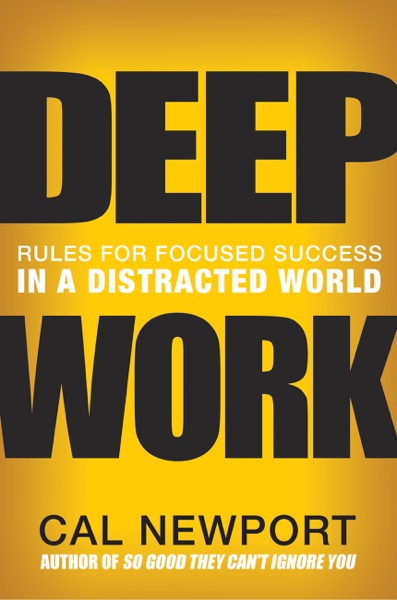
Newport argues that the ability to focus intensely on cognitively demanding tasks has become rare and therefore valuable. He distinguishes between deep work and shallow work, showing how distraction has become the default. The book gained traction because it addresses a widespread anxiety about productivity in an age of constant notifications.
What readers sayAbout Deep Work.
Turned off notifications and created deep work blocks. My writing productivity tripled in two weeks just from reading this.
The shallow work trap resonated hard. I realized meetings filled my days without producing anything meaningful.
Ditched my open office chaos for focused time blocks. My code quality improved and I'm less burned out now.
Some repetition on distraction dangers. Still enforced my no-email mornings which transformed my focus.
The grand gesture concept made me invest in a dedicated quiet workspace. Finally finished my novel outline.
Readers also recommendWhat people on the shelf are watching next.
Watched it on the train and actually changed my morning the next day. The two-minute rule stuck with me.
Atomic HabitsThe sumo wrestler part had me laughing out loud. Never thought economics could be this fun.
FreakonomicsTen minutes and I finally understood why my dad never sold his house. Sent it to my sister.
The Psychology of MoneyBig book, tiny summary, and it still got the main point across. The Peugeot bit is genius.
SapiensI read the book years ago. This version is faster and honestly clearer.
Rich Dad Poor DadThe animation makes System 1 and System 2 click in a way the 500 pages never did for me.
Thinking, Fast and Slow