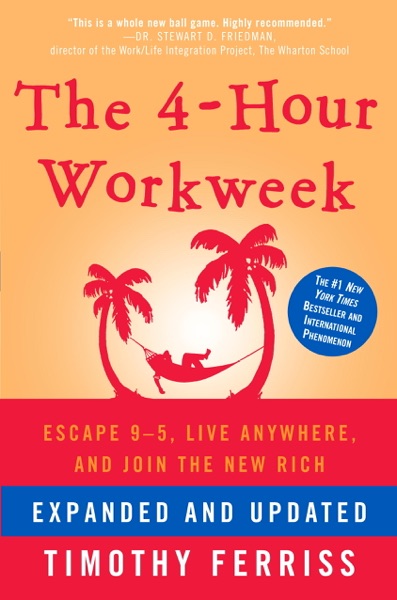
Ferriss argues that working fewer hours is possible by eliminating non-essential tasks and automating or outsourcing the rest. He teaches how to define your lifestyle first, then design work around it rather than letting work consume you. Real examples show people reclaiming time for what matters.
What readers sayAbout The 4-Hour Workweek.
The 'low-information diet' idea—stop reading everything—freed up hours in my week. I outsourced email management and actually have weekends now.
Ferriss walks through automating routine decisions. I set up templates for my most common client requests and cut email time in half.
Some tactics felt too entrepreneurial for my office job, but the core principle—stop being busy, start being effective—changed how I work.
The Pareto principle—focus on the 20% of tasks that matter most—helped me say no to meetings. Productivity went up, stress went down.
The DEAL framework for automating and outsourcing was practical. Outsourced my social media and suddenly had time for creative work again.
Readers also recommendWhat people on the shelf are watching next.
Watched it on the train and actually changed my morning the next day. The two-minute rule stuck with me.
Atomic HabitsThe sumo wrestler part had me laughing out loud. Never thought economics could be this fun.
FreakonomicsTen minutes and I finally understood why my dad never sold his house. Sent it to my sister.
The Psychology of MoneyBig book, tiny summary, and it still got the main point across. The Peugeot bit is genius.
SapiensI read the book years ago. This version is faster and honestly clearer.
Rich Dad Poor DadTurned my phone off for two hours after watching. That's the review.
Deep Work