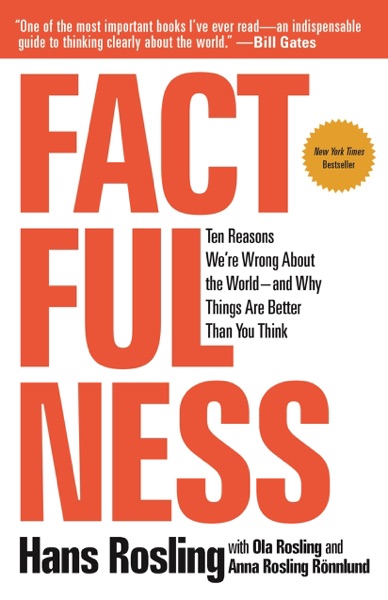
Hans Rosling argues that most people are dramatically wrong about global progress—poverty, health, and literacy have improved far more than news media suggests. The book became essential because it replaces doom-and-gloom narratives with data-driven evidence, helping readers understand the world actually is getting better.
What readers sayAbout Factfulness.
The gap between facts and feelings hit me hard. I realized how doom-scrolling was warping my actual understanding of progress in child mortality and poverty.
Stopped being so pessimistic after learning the actual statistics on extreme poverty. This should be required watching before watching news.
The four-income-levels framework changed how I understand development. I sent it to my journalist friend who covers global issues.
Good counterweight to negativity bias, though some claims move past quickly. The animation helped make the data stick though.
My worldview shifted. Realizing vaccines and education spread faster than I thought made me less scared about the future.
Readers also recommendWhat people on the shelf are watching next.
Watched it on the train and actually changed my morning the next day. The two-minute rule stuck with me.
Atomic HabitsThe sumo wrestler part had me laughing out loud. Never thought economics could be this fun.
FreakonomicsTen minutes and I finally understood why my dad never sold his house. Sent it to my sister.
The Psychology of MoneyBig book, tiny summary, and it still got the main point across. The Peugeot bit is genius.
SapiensI read the book years ago. This version is faster and honestly clearer.
Rich Dad Poor DadTurned my phone off for two hours after watching. That's the review.
Deep Work